
UK housebuilding market 2025: A valuation outlook
- News
8/10/2025
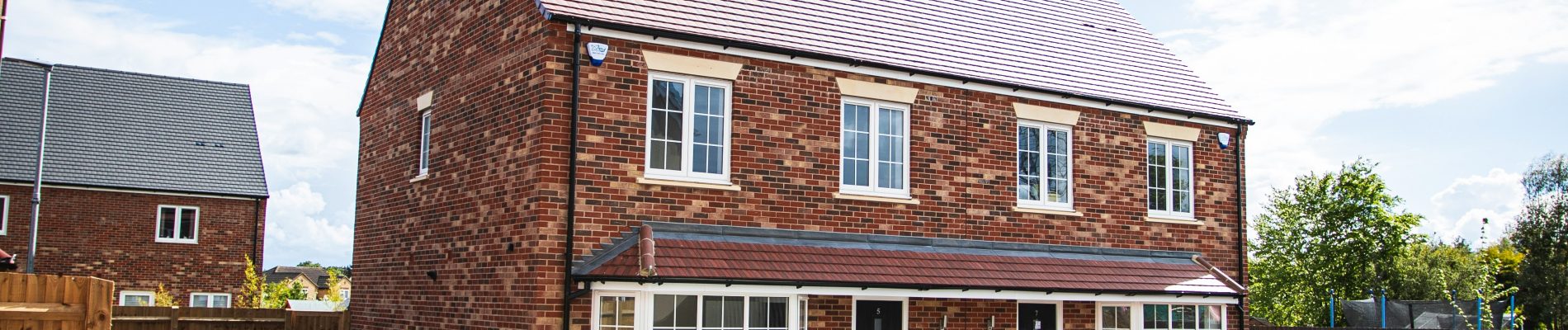
When one of the UK’s largest house builders, Taylor Wimpey, announced it doesn’t expect to return to pre-pandemic building levels until at least 2030, the message resonated far beyond its investors. It captured the broader sentiment of an industry facing structural challenges, and called into question whether the government’s 1.5 million new homes target is achievable under current market conditions.
At its 2019 peak, Taylor Wimpey delivered around 16,000 homes a year. Today, it is producing closer to 10,600, with expectations to reach only 14,000 annually by the end of the decade. It’s a trajectory mirrored by other major developers, and one that underscores the deep recalibration under way across UK housebuilding.
From a valuation standpoint, these shifts tell an important story about risk, resilience, and the true value of assets within the construction and development sector.
A Complex Construction Climate
The slowdown in new housing delivery is not a matter of will, but of economics. Developers are contending with an intricate mix of rising build costs, tighter finance conditions, and regulatory headwinds.
Build costs remain significantly elevated. Materials, energy, and labour inflation coupled with the ongoing costs of building safety compliance continue to erode margins. At the same time, high interest rates have reduced both buyer affordability and developer borrowing capacity, creating a dual challenge of softening demand and constrained supply.
Planning reform, while welcomed in principle, has yet to deliver meaningful acceleration. The introduction of the Building Safety Regulator has added vital oversight but also significant delay, particularly for higher-rise projects. In some parts of London, new residential construction has virtually stalled as a result.
Add to this the uncertainty surrounding fiscal policy and property taxation and confidence across the market remains fragile.
What This Means for Value
For valuers and investors, the implications are clear: the fundamentals underpinning land and development valuations have shifted.
Where pre-pandemic appraisals might have assumed steady absorption rates, predictable timelines, and moderate cost growth, today’s models must factor in:
- Extended delivery schedules due to planning and regulatory delays
- Increased build contingencies to account for cost volatility
- Reduced developer margins as input costs outpace achievable sale prices
- Higher discount rates reflecting elevated market risk
Residual land values, in particular, are coming under pressure. With higher financing and construction costs, the amount developers can viably pay for land has fallen, a trend that is likely to persist until market conditions stabilise.
Data Points to a Wider Slowdown
Recent data supports this picture. The UK Construction PMI has remained below 50 for much of the year signalling sector contraction, with housebuilding consistently the weakest-performing segment.
Major firms such as Crest Nicholson and Vistry Group have issued warnings tied to safety remediation costs and inflationary pressures. Sales rates per development outlet have declined year-on-year, and forward order books are thinning as buyer sentiment remains subdued.
While infrastructure investment and retrofit programmes offer pockets of resilience, residential construction remains constrained by affordability and regulation.
Recalibrating Risk in Valuation Models
Against this backdrop, valuation approaches must adapt. The challenge is not simply to capture current market sentiment, but to assess longer-term viability and risk-adjusted performance.
At Hickman Shearer, we are seeing heightened focus on:
- Timing and phasing assumptions — incorporating more conservative delivery profiles
- Cost inflation sensitivity — building flexibility into appraisals to reflect volatility
- Exit pricing — factoring in the potential for price correction or slower sales
- Alternative use scenarios — exploring mixed-use or repurposing options to sustain land value
These adjustments are essential to reflect the real-world constraints shaping today’s market. In effect, valuations are not only a snapshot of current value, but a reflection of how confidently an asset can perform under pressure.
A Market in Transition
The UK’s housing shortage remains acute but so too are the barriers to unlocking supply. The government’s ambition to “build, baby, build” runs headlong into an industry grappling with risk, regulation, and restraint.
For valuation professionals, this moment calls for clarity and caution. It requires a deeper understanding of development dynamics, capital flows, and regulatory timelines and the agility to adjust models as these variables evolve.
Because while the volume of homes built may be slowing, the need for accurate, evidence-based valuations has never been greater. Understanding where risk lies and where opportunity remains will be key to unlocking the sector’s potential in the years ahead.
About Hickman Shearer
At Hickman Shearer, we specialise in delivering exceptional RICS and ASA certified capital asset valuation, management, and sales services. Our expertise span a wide range of global industries, ensuring that we provide tailored and insightful commercial valuations and equipment valuation services to meet your unique needs. With a strong track record of delivering robust and independent advice, we are committed to supporting businesses in achieving their strategic objectives. Find out more here >> About Us
Sign up to our Industry Insights Newsletter to stay up to date with the latest industry updates >> Subscribe

Insights
News & Case Studies
News
Hillhead 2026: The future of plant is making existing assets work harder
15/07/2026
News
MACH 2026: Technology is accelerating, but asset strategy is becoming the bigger conversation
15/07/2026

News
Higher for Longer: What the Current Interest Rate Environment Means for Asset Valuations
15/07/2026