MACH 2026: Technology is accelerating, but asset strategy is becoming the bigger conversation
- News
- Thought Leadership
15/07/2026
MACH 2026 brought together more than 500 exhibitors and around 26,000 visitors to the NEC in Birmingham in April this year. The event showcase’s the latest advances in automation, machining, robotics, additive manufacturing and digital production, while highlighting the challenges and opportunities currently facing UK manufacturers.
For the Hickman Shearer team, the exhibition offered an opportunity to see the latest machine tools, and provided a valuable insight into how manufacturers are approaching investment, productivity and capital asset management in an increasingly uncertain economic landscape.
Tim Howard MRICS, ASA, Managing Director, commented:
“Manufacturers are continuing to invest, but those investment decisions are becoming increasingly strategic. Businesses are looking beyond simply acquiring new technology and are asking how they can maximise the value of the assets they already own.”
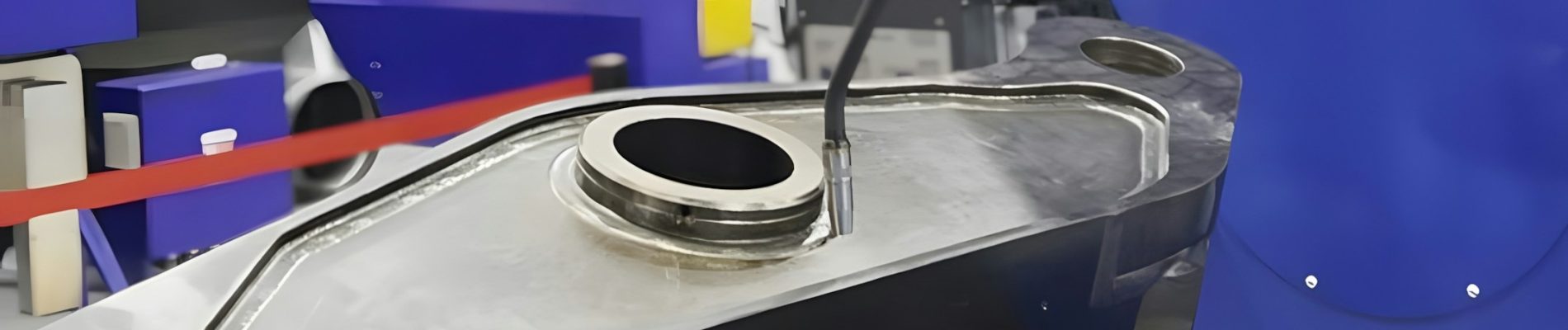
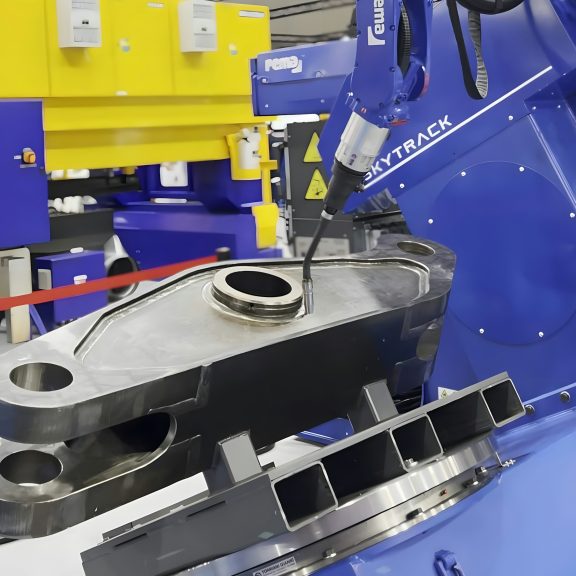
One area that stood out throughout the exhibition was the pace of development in industrial robotics. Rather than showcasing standalone robot arms, exhibitors demonstrated complete automation cells where robotics, vision systems and AI enabled software worked together to improve productivity and consistency.
Collaborative robots featured prominently, performing tasks such as machine tending, welding, inspection and material handling alongside human operators. Advances in machine vision and digital simulation are making these systems quicker to deploy and easier to integrate, reducing the barriers that have traditionally prevented smaller manufacturers from adopting automation.
It was also clear that robotics is no longer solely about replacing manual labour. Manufacturers are increasingly using automation to address skills shortages, improve repeatability and free skilled operators to focus on higher value activities. As labour markets remain tight, these technologies are becoming an important tool for maintaining competitiveness rather than simply reducing costs.
One of the strongest themes throughout the exhibition was the drive towards greater productivity through automation and digitalisation. Live demonstrations showed how robotics, AI assisted machining, digital twins and additive manufacturing are moving into mainstream production, enabling manufacturers to improve efficiency, increase flexibility and respond more quickly to changing customer demand.
However, new investment inevitably raises another question: what happens to the equipment being replaced?
For many organisations, legacy machinery continues to sit on balance sheets or in storage long after it has been removed from production. As investment cycles shorten and technology develops more rapidly, having a clear strategy for managing surplus assets is becoming increasingly important.
James Fox ASA, Senior Director, said:
“One of the biggest takeaways from MACH was the pace of technological change. Manufacturers are replacing equipment for reasons of productivity rather than because machinery has reached the end of its useful life. As automation becomes more accessible, businesses are making investment decisions earlier in the asset lifecycle. That creates significant opportunities in the secondary market, provided organisations understand the value of those assets before making disposal decisions..”
The conversations throughout the week also reflected a growing focus on resilience within UK manufacturing. Supply chain security, access to funding and improving operational efficiency featured heavily throughout the seminar programme, with businesses looking for practical ways to strengthen competitiveness whilst continuing to invest for growth.
For Hickman Shearer, these discussions reinforce a wider trend. Capital equipment should no longer be viewed simply as a fixed asset. Throughout its lifecycle, it represents an opportunity to improve financial performance, whether through accurate valuations, informed investment decisions or strategic asset disposal.
As manufacturing continues to embrace new technologies, understanding the true value of existing assets will become just as important as investing in the next generation of equipment.

Insights
News & Case Studies
News
Hillhead 2026: The future of plant is making existing assets work harder
15/07/2026
News
MACH 2026: Technology is accelerating, but asset strategy is becoming the bigger conversation
15/07/2026

News
Higher for Longer: What the Current Interest Rate Environment Means for Asset Valuations
15/07/2026