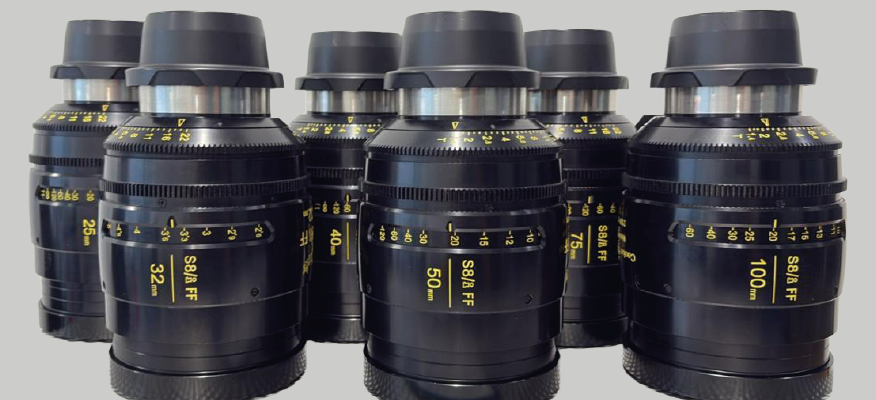
The Case for Releasing Surplus Broadcast Equipment: Why Idle Assets Cost More Than You Think
- News
2/06/2026
For many organisations operating in the broadcast and media production sector, the pace of technological change is relentless. The transition from SDI to IP-based infrastructure, the shift toward 4K and HDR production workflows, the rapid evolution of camera sensor technology and cloud-based production tools, each of these developments drives investment in new equipment and, in doing so, generates a corresponding volume of assets that are no longer in active use.
What happens to those assets is a question that fewer organisations address with the same strategic rigour applied to acquiring new technology. The result, in many cases, is professional-grade equipment sitting idle in storage: depreciating, occupying physical space, and generating neither operational nor commercial value.
The Scale of the Challenge
The broadcast equipment market continues to grow at pace. Market analysts project global broadcasting equipment revenues to reach approximately USD 8.4 billion by 2032, driven in large part by the ongoing transition to IP and UHD workflows. For broadcasters and production companies, that trajectory implies a sustained programme of capital investment and, with it, a sustained flow of legacy equipment being retired from active use.
Replacement cycles across the sector are compressing. Professional camera technology, which historically operated on a five to seven year replacement cycle, is now turning over in as little as three to four years as manufacturers introduce advances in sensor resolution, AI-assisted focusing and modular form factors. Each upgrade cycle leaves a trail of capable, often lightly used equipment that no longer fits the organisation’s technical requirements but retains genuine market value.
Equipment stored without a disposal strategy does not simply wait. Physical and electronic assets depreciate over time regardless of use, and that depreciation accelerates when assets sit without maintenance, environmental monitoring or formal management. The cost of idle equipment is not simply an opportunity cost, it includes storage overhead, insurance implications, and the administrative burden of managing assets with no clear operational purpose.
A Separate Market, a Separate Buyer
One concern that surfaces consistently in conversations with broadcast organisations considering asset disposal is the risk of cannibalising demand for their own current product lines, or of appearing to compete with their technology partners’ new releases. In practice, this concern is rarely well-founded.
The secondary market for professional broadcast and production equipment serves a buyer profile that is largely distinct from the primary market. Purchasers at auction include independent production companies, freelance cinematographers, post-production facilities in emerging markets, educational institutions and international buyers in regions where budget constraints make new equipment economically inaccessible.
This distinction is supported by observable market data. MPB, one of the UK’s leading used camera and production equipment platforms, reported a 19 percent increase in net revenue for the fiscal year ending March 2025, recirculating over 564,000 items globally. The company’s chief executive noted that demand is being driven by digital content creators and international adoption of the circular model, buyers who are expanding their capabilities within defined budget parameters, not substituting for a new-equipment purchase they would otherwise have made. As market analysts note, the secondary market significantly lowers the barrier to entry for professionals who want quality equipment at a reduced price point, a dynamic that operates independently of the new equipment market.
Releasing surplus assets through a professionally structured auction process does not dilute a manufacturer or broadcaster’s position in the primary market. It addresses a separate demand that exists regardless, while returning capital to the organisation that is otherwise lost to depreciation.
The Sustainability Dimension
Beyond the commercial case, there is a growing sustainability argument for structured asset disposal. Professional broadcast equipment contains significant quantities of high-value raw materials; metals, rare earth elements and precision-engineered components, that represent considerable embodied energy and resource cost. Equipment that depreciates to zero in storage and is eventually scrapped rather than reused represents a straightforward failure of the circular economy.
Responsible asset disposal, by contrast, extends the productive life of equipment, reduces the demand for raw material extraction, and keeps functioning technology in active use. For organisations with sustainability commitments and ESG reporting obligations, a structured approach to asset lifecycle management, including professionally managed disposal, forms a material part of that story.
From Valuation to Sale: The Hickman Shearer Approach
Realising value from surplus broadcast and production equipment requires more than simply listing assets for sale. The process begins with an accurate understanding of what equipment is held, what condition it is in, and what it is genuinely worth in the current secondary market.
Hickman Shearer provides RICS and ASA certified capital asset valuations covering a comprehensive range of broadcast and production equipment; from cameras, lenses and grip to audio infrastructure, transmission equipment, outside broadcast vehicles and studio systems. Our valuations are grounded in current market data and supported by our direct experience of secondary market activity across the sector.
From valuation, we manage the full asset disposal cycle. For organisations with substantial catalogues of surplus equipment, an online auction programme, that is marketed internationally to our data base of qualified buyers spanning 22 countries, provides a competitive, transparent route to realising maximum value. For more targeted disposals, private treaty sale offers a structured alternative where confidentiality or specific buyer relationships are a consideration.
Our recent auction programmes across the broadcast and media sector have consistently achieved strong sell-through rates, with assets reaching buyers across Europe, North America, the Middle East, Africa and Asia Pacific. The international reach of that buyer network is a material factor in achieving competitive outcomes, specialist equipment finds its market most efficiently when it is visible to the widest relevant audience.
Starting the Conversation
If your organisation is managing a volume of surplus broadcast or production equipment, whether following a technology upgrade, a facilities rationalisation or a broader business change, the first step is understanding what you have and what it is worth.
Hickman Shearer’s broadcast and communications team works with clients across the sector to develop practical, commercially structured disposal programmes that are appropriate to the scale and nature of the assets involved.
Find out more about our broadcast and communications asset services →
Find out more here >> About Us
Sign up to our Industry Insights Newsletter to stay up to date with the latest industry updates >> Subscribe

Insights
News & Case Studies
News
Hillhead 2026: The future of plant is making existing assets work harder
15/07/2026
News
MACH 2026: Technology is accelerating, but asset strategy is becoming the bigger conversation
15/07/2026

News
Higher for Longer: What the Current Interest Rate Environment Means for Asset Valuations
15/07/2026