
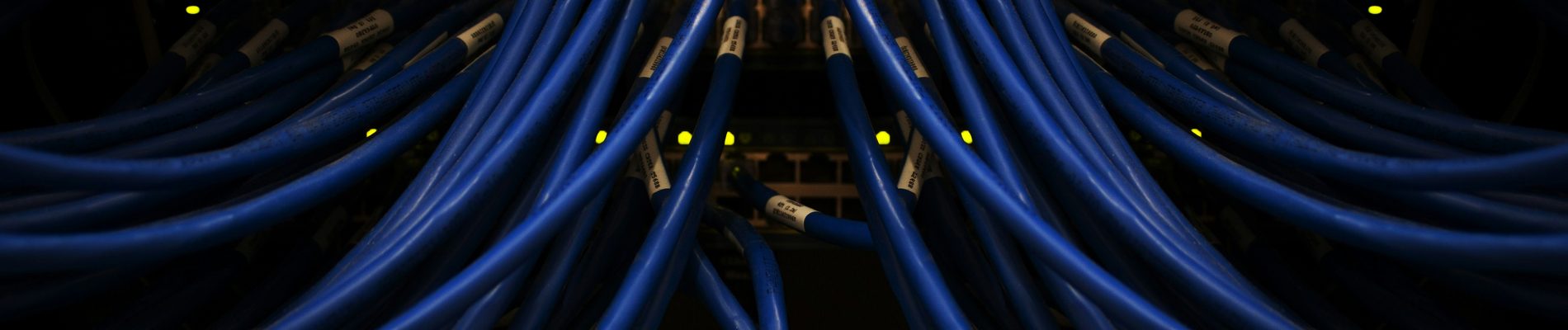
SDI’s Long Goodbye: What Broadcast’s IP Transition Means for Equipment Values
- News
- Thought Leadership
14/07/2026
SDI still carries 82% of broadcast production workflows in 2026, according to Haivision’s latest annual survey of global broadcast technology trends. Yet the industry conversation has moved decisively past whether facilities should migrate to IP infrastructure, and on to how fast, and in what order. For anyone financing, managing or valuing broadcast equipment, that shift in emphasis matters more than the headline percentage suggests.
From Planning To Implementing
For several years, IP migration in broadcast has been discussed in mostly aspirational terms: a direction of travel rather than an active programme of work. That is changing. Facilities are now moving through migration in three recognisable stages. The first is hybrid SDI/IP, where existing SDI infrastructure remains in place while new rooms or expansions are built IP-native, bridged by SDI-to-IP gateways. Most facilities operating today sit at this stage. The second is IP-primary with SDI fallback, where main routing and processing has moved to IP and SDI islands remain only for legacy equipment yet to be replaced. The third is IP-native, where SDI is retained, if at all, purely for archive playback and the facility runs as a managed Ethernet fabric end to end.
2026 has produced genuine examples of that third stage in practice, including BBC Wales, NHK Tokyo and several Saudi government broadcast centres. These are not pilot projects. They are operational facilities that have completed the transition, and they demonstrate that full IP-native operation is now a proven, not theoretical, end state.
The Standards Are Catching Up
Part of what has unlocked this shift is progress on the standards themselves. In early 2026, the Linux Foundation, working with the EBU and NABA, published the MXL v1.0.0 Release Candidate, freezing an API designed to close a gap that SMPTE ST 2110 was never built to address. Where ST 2110 excels at precision transport over managed IP networks, its nanosecond-level timing requirements and dependence on Precision Time Protocol synchronisation have been consistently cited by engineers as the biggest operational hurdle to adoption. MXL takes a different approach, treating media transfer as a memory-to-memory operation better suited to software-defined and cloud-based production environments.
This mattered enough to feature prominently at NAB Show 2026 in Las Vegas, where SMPTE’s IP Showcase brought together AIMS, AMWA and the VSF around a shared push to make ST 2110 adoption easier and faster. The direction is clear, even if the pace still varies significantly by facility size, budget and legacy infrastructure.
What This Means For Equipment Values
Legacy SDI infrastructure does not lose value all at once as this transition plays out. It depreciates unevenly, and at different points, depending on where a given facility sits on the migration curve. Equipment retiring from a Stage 1 hybrid facility, where SDI is being phased out gradually alongside continued investment, behaves differently in the secondary market to equipment displaced early by a facility leapfrogging straight to an IP-native rebuild. Both create supply, but the volume, timing and buyer appetite for each differ.
We saw this dynamic play out directly in our own recent Premium Broadcast, Photography and IT Equipment Auction, where infrastructure and support kit, including rack cases, remote control panels and power distribution units, outperformed initial expectations. That kind of result is exactly the sort of live market evidence that residual value assumptions built on historic SDI benchmarks increasingly need to be tested against.
“The pace of broadcast IP migration is no longer the open question it was a few years ago. What’s changed is that we’re now seeing real, completed transitions, and that creates genuine complexity for anyone holding legacy SDI equipment on a balance sheet. Understanding exactly where an asset sits in that lifecycle is central to getting the valuation right.”
— Tim Howard MRICS ASA, Managing Director, Hickman Shearer
What Lenders and Lessors Should Be Watching
- Which migration stage a facility sits at, and how that is likely to change over the term of a lease or facility
- Vendor support commitments and end-of-life timelines for SDI product lines
- Secondary market appetite and pricing for SDI infrastructure versus IP-native equipment
- The pace of standards maturation, including MXL and IPMX, and its likely effect on adoption speed
Looking Ahead
The broadcast sector is not abandoning SDI overnight, and for many facilities a fully justified business case for full IP-native operation is still some years away. But the direction of travel is now backed by proven deployments, maturing standards and a clear technical roadmap, rather than vendor aspiration alone. That combination points to a sustained, multi-year replacement cycle across the sector, and with it, a growing volume of legacy equipment that will need independent, current-market valuation as it moves through disposal, refinancing or restructuring.
Whether you are financing broadcast infrastructure, managing a portfolio with exposure to legacy SDI equipment, or planning a facility upgrade of your own, understanding today’s market is essential to making confident decisions. To discuss how the IP migration cycle affects the value of your broadcast asset portfolio, contact our team.
About Hickman Shearer
Hickman Shearer provides independent, RICS-regulated capital asset valuation, management and sales services across a broad range of industries, including broadcast and media production. We help lenders, investors, owners and operators understand the value of their assets, make informed commercial decisions and maximise returns through independent advice backed by market evidence.
Contact us: expert@hickman-shearer.co.uk | +44 (0)20 3668 0580
Learn more: hickman-shearer.co.uk

Insights
News & Case Studies
News
Hillhead 2026: The future of plant is making existing assets work harder
15/07/2026
News
MACH 2026: Technology is accelerating, but asset strategy is becoming the bigger conversation
15/07/2026

News
Higher for Longer: What the Current Interest Rate Environment Means for Asset Valuations
15/07/2026