
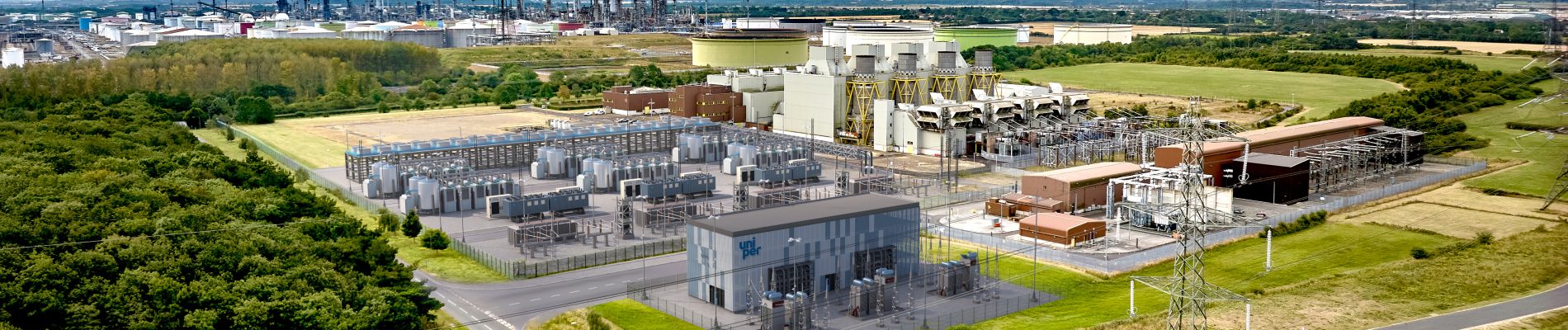
Humber Hydrogen Production Facility: The UK’s Green Energy Transition
- News
20/10/2025
Hydrogen in the Humber: Building Value in the UK’s Green Energy Transition
The UK’s industrial heartlands are in transformation. The latest signal came this month as Uniper advanced its plans for the Humber H2ub (Green) project; a proposed 120 MW electrolytic hydrogen production facility at Killingholme in North Lincolnshire.
With planning permission now lodged, the project marks a tangible move toward large-scale low-carbon hydrogen generation in the UK, and a significant development in the valuation landscape of the green energy and industrial decarbonisation sectors.
Re-shaping Industrial Value Chains
The Humber region remains the UK’s most carbon-intensive industrial cluster, responsible for roughly 12 million tonnes of CO₂ annually. Yet its deep-water ports, industrial infrastructure, and access to renewable energy assets make it uniquely positioned to lead the country’s low-carbon transition.
The Humber H2ub will produce hydrogen via electrolysis powered by renewable electricity, aligning with the UK Government’s Low Carbon Hydrogen Standard. It will directly support Phillips 66’s Humber Refinery, replacing some of the refinery’s fuel gas in fired heaters; one of the most difficult areas of industrial decarbonisation.
From a valuation perspective, this signifies an emerging shift from fossil-fuel-dependent asset portfolios toward low-carbon infrastructure. The ability to adapt and retrofit existing facilities, rather than decommission them, enhances asset life, reduces stranded-asset risk, and maintains industrial value within the region.
The Investment Case for Hydrogen
The Humber H2ub is projected to deliver £40 million in annual GVA, with up to £20 million retained locally. Around 110 jobs could be created during construction, alongside wider supply-chain opportunities.
Yet the true long-term value lies not in the plant alone, but in what it unlocks; a new market for hydrogen as a substitute for fossil fuels in refining, chemicals, transport, and power generation.
Hydrogen’s role in asset valuation is still developing. Projects like this will influence how investors, valuers, and lenders view hydrogen-related infrastructure, from electrolyser technology and storage facilities to the pipelines, ports, and industrial sites that enable production and distribution.
As these projects progress, valuation models must evolve to account for:
-
Policy dependency — as profitability remains closely tied to government frameworks like the UK’s Low Carbon Hydrogen Agreement.
-
Technology risk — where asset performance and life-cycle value hinge on evolving electrolyser efficiency, renewable energy integration, and maintenance costs.
-
Revenue visibility — with future hydrogen offtake agreements and carbon pricing mechanisms shaping long-term cash flows.
A Regional Example of a Global Trend
Hydrogen is now central to decarbonisation strategies worldwide. The EU Hydrogen Bank, U.S. Hydrogen Hubs, and Japan’s hydrogen import partnerships demonstrate how nations are using state-backed incentives to attract investment and de-risk early adoption.
The UK’s hydrogen ambition (10 GW of low-carbon capacity by 2030) hinges on projects like Humber H2ub reaching financial close. But beyond policy targets, this wave of industrial hydrogen projects is re-defining asset classes.
Traditional fossil-based facilities are being repurposed rather than retired. Refineries are evolving into multi-fuel energy complexes; pipelines and ports are being re-valued not as legacy assets but as strategic enablers for hydrogen and carbon capture.
The result is a new hybrid infrastructure market where legacy industrial assets intersect with renewable technologies, creating opportunities for re-valuation, refinancing, and cross-sector partnerships.
Challenges that Shape Future Value
While the planning submission marks progress, there remain several material uncertainties that influence valuation outlooks:
-
Cost competitiveness: Green hydrogen production is still significantly more expensive than natural gas or grey hydrogen. Until electricity prices fall or efficiency improves, economic viability will rely heavily on subsidies or premium offtake agreements.
-
Policy clarity: The UK’s Hydrogen Business Model and Allocation Rounds must deliver predictable support to attract private capital at scale.
-
Infrastructure readiness: The Humber’s proposed hydrogen pipeline and storage network must keep pace to ensure reliable distribution and scalability.
-
Technology maturity: Electrolyser assets, while improving, still face performance degradation and cost uncertainty that affect long-term asset valuation and depreciation.
Each of these factors feeds directly into how investors assess asset value and risk profiles across the hydrogen and wider green energy sectors.
Hydrogen as a Catalyst for Regional and Asset Resilience
For the Humber, a region with deep industrial roots and significant transition pressure, the Humber H2ub represents continuity through change. By anchoring hydrogen production locally, existing industries can decarbonise without relocating, sustaining regional employment and economic contribution.
From an asset management standpoint, this provides a bridge between legacy and future value:
-
Legacy assets such as refineries and chemical plants gain extended relevance through hydrogen integration.
-
New assets — electrolysers, storage facilities, grid interconnections — become the foundations of long-term industrial resilience.
This intersection between old and new asset classes is where much of the UK’s future valuation growth will emerge.
Building a Market for Green Value
At Hickman Shearer, we see the valuation of green energy infrastructure not just as a matter of technology or regulation, but of market maturity and confidence. Projects like the Humber H2ub (Green) help establish benchmarks; tangible evidence of what low-carbon industrial transition looks like in practice, and how it can generate enduring economic and social value.
As the UK’s energy system evolves, hydrogen will not only decarbonise production but redefine how we measure and manage industrial assets from cost and output, to resilience and sustainability.
The Humber H2ub is more than a project; it’s a signal that industrial value in the UK’s green future will depend on adaptability, infrastructure readiness, and the capacity to invest where energy, policy, and innovation converge.
About Hickman Shearer
At Hickman Shearer, we specialise in RICS and ASA-certified capital asset valuation, management, and sales services, providing robust, independent valuations that support investment, financing, and strategic decision-making at every stage of the asset lifecycle.
Our expertise extends across the energy, industrial, and infrastructure sectors, with a growing focus on renewables and green technologies from solar and wind to hydrogen and battery storage. As the green transition accelerates, we help investors, operators, and lenders understand how emerging technologies reshape value, risk, and opportunity in a rapidly evolving energy landscape. Get in touch with our industry experts today to discuss how our services can help your business: Find Out More >>
Find out who we are here >> About Us
Sign up to our Quarterly Industry Insights Newsletter >> Subscribe
Follow our developments on LinkedIn >> Follow Us

Insights
News & Case Studies
News
Hillhead 2026: The future of plant is making existing assets work harder
15/07/2026
News
MACH 2026: Technology is accelerating, but asset strategy is becoming the bigger conversation
15/07/2026

News
Higher for Longer: What the Current Interest Rate Environment Means for Asset Valuations
15/07/2026